By Tom and Jerry Caraccioli

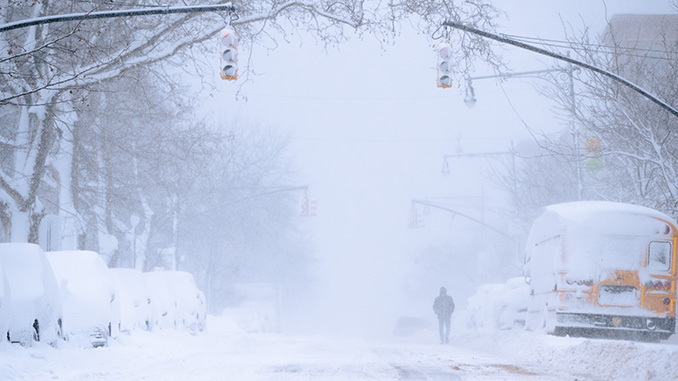
Upstate New Yorkers who live near Lake Ontario know all about lake effect snowstorms.
But the science behind it may not be as well known.
“Lake-effect snow develops as colder air moves over distances of less than 50 miles of relatively much warmer water,” explained Scott Steiger, SUNY Oswego professor of meteorology and director of Lake-Effect Storm Prediction and Research Center. “This leads to the formation of clouds as heat and moisture are added to the air causing rising motions, cloud and eventually snow formation, assuming the temperature in the lowest mile of the atmosphere is 0 degrees Celsius. Otherwise, you can get lake-effect rain.”
For area weather prognosticators, predicting the severity of this winter season in Central New York has become predicated on a weather system in the Pacific Ocean that only occurs periodically in the cycle of a decade. This system is known as El Nino. Because of it, providing information about lake effect weather becomes a little easier.
With its above average sea surface temperatures in the Pacific Ocean and low-level warmer winds blowing west to east, El Nino will cause temperatures on the East Coast to be warmer than usual. In some forecasts the air traveling from west to east — what is normally known as an arctic blast from above the 48th parallel — is predicted to not be as prevalent and cold this winter. The warmer air will likely cause precipitation in the form of more rain and ice versus heavier amounts of snow the Northeast usually receives.
Thus, a reprieve from heavy snow coming off Lake Ontario from the cold arctic air in Canada is predicted to be more an aberration this year and should be welcomed as such.
When asked about how changing winds of the atmosphere could evolve in the future and affect our weather in all seasons, Steiger said, “That is a question we don’t have a good handle on. With warmer waters, that could lead to more lake-effect. However, what climate change will do to the wind patterns across Central New York in the future is unknown. To get lake-effect precipitation in CNY, we need cold winds coming from the west-northwest. Who knows if that will become more or less prevalent in the future. We could get more lake-effect rain than snow.”
But lake effect snow is not a phenomenon that will disappear. And ultimately this year, that is an equation with effects that will remain to be seen.
Tom and Jerry Caraccioli are freelance writers originally from Oswego. They have co-authored several books, mostly about hockey. They also host a monthly television and multi-platform segment on WSYR-Channel 9 (ABC), “Backroads to Bridge Street with Tom & Jerry.”