
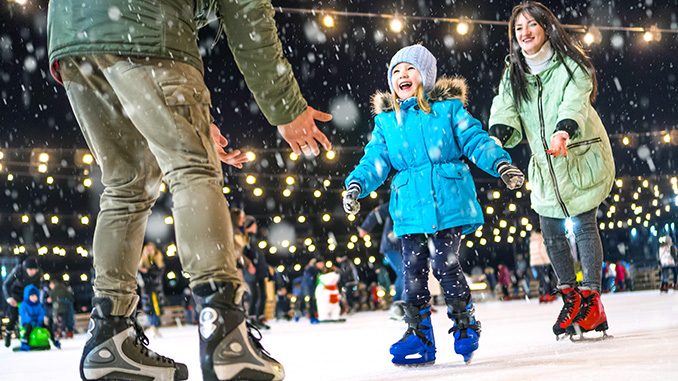
Try this ice skating equipment to keep kids safer while they’re learning
By Deborah Jeanne Sergeant
Research from the University at Buffalo indicates that 59% of injuries sustained while ice skating from 2002-2021 were head and neck related, and that males and younger children were more likely to sustain ice-skating injuries than other demographics.
Some head and neck injuries can cause lasting issues, including concussions. Along with supervision and perhaps skating lessons, protective gear can help kids avoid getting hurt when they experience the inevitable fall on the ice.
The first equipment for safety is the skates themselves. It’s tempting to have a child make do with an older sibling’s outgrown skates to save some money. But if the skates are still too big, don’t pass them down yet. A sloppy fit can mean the ankle is less stable. Sharpen the blades, as dull skate blades snag on the skating surface and can contribute to falls.
Skating technique also matters. An important part of skating lessons is learning how to fall. Children can practice safe falling while at home on safe surface. When falling backwards, tuck the chin toward the chest to better protect the head from impact. For any fall, avoid bending the arm at the wrist, but instead, bend at the elbow. This allows a larger area of the arm to absorb the shock of the fall. Bending at the wrist can raise the risk of a broken wrist, as the force of the impact affects the small bones of the wrist.
Skating lessons can also help children learn the proper skating technique to limit falls. New skaters can also learn safety tips such as avoiding grabbing onto other skaters for stability. That strategy often ends in both skaters falling.
Much of the equipment used for roller skating and inline skating applies to ice skating. Helmets are the most important. The back of the head should be covered and the helmet should fit well without tilting or sliding. Adjust the chin strap for a secure and comfortable fit.
Hard shell knee pads and elbow pads can help children protect themselves from forward and backwards falls.
Wrist guards are not only designed to protect against impact injuries, but to prevent bending at the wrist. Their stiff design forces the user to bend the arm at the elbow in case of a fall. Some wrist guards also feature a padded palm area.
Skating “trainers”—devices that look somewhat like a mobility walker—can help children gain more confidence as they learn how to keep their balance as they skate. Trainers catch little wobbles before they turn into head-over-heels falls.
Above all, watch your children while they skate to curb horseplay and unnecessary risks and to remind them of the best skating techniques. Practicing what they learn at their skating lessons will help improve the instruction’s effectiveness.