
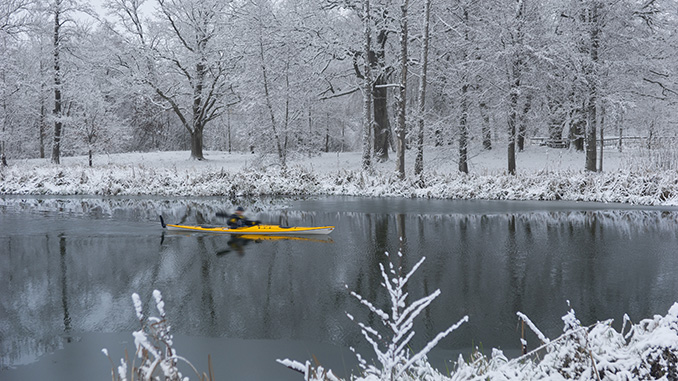
Frigid, icy water? No worries. Snow? Paddle on
By Aaron Gifford
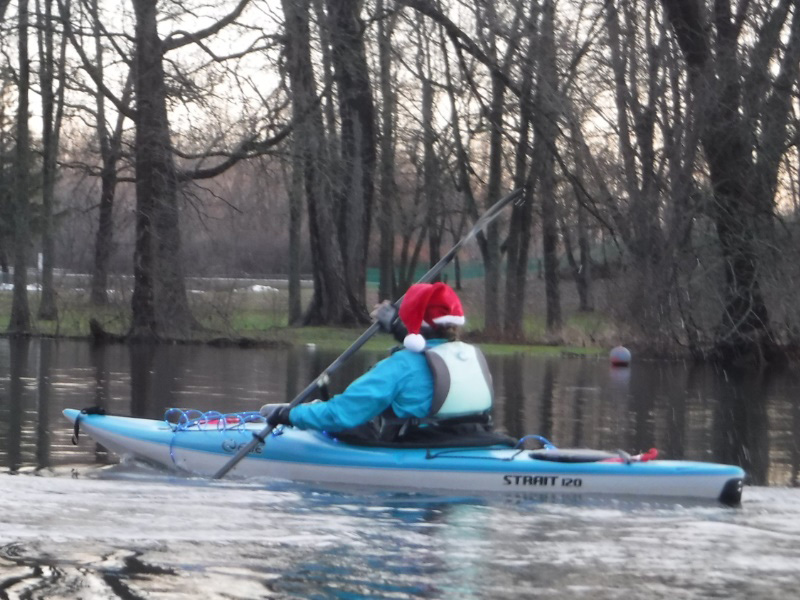 Kayaking enthusiasts should reconsider putting their boats up in the rafters ahead of Thanksgiving or Christmas.
When all the leaves have fallen and the motorboats are long gone from local lakes and rivers, Mother Nature offers Upstate New York paddlers an entirely different look and feel.
The cold, clear, still water brings a certain tranquility. Unobscured views along the shoreline reveal more wildlife in its element, such as deer and wild turkeys, which would be unseen in the warmer, greener months when waterways are more populated with people.
“It’s enjoyable because it’s so quiet,” said Kim Wojnowicz, an active member of the Central New York (CNY) Kayak Club.
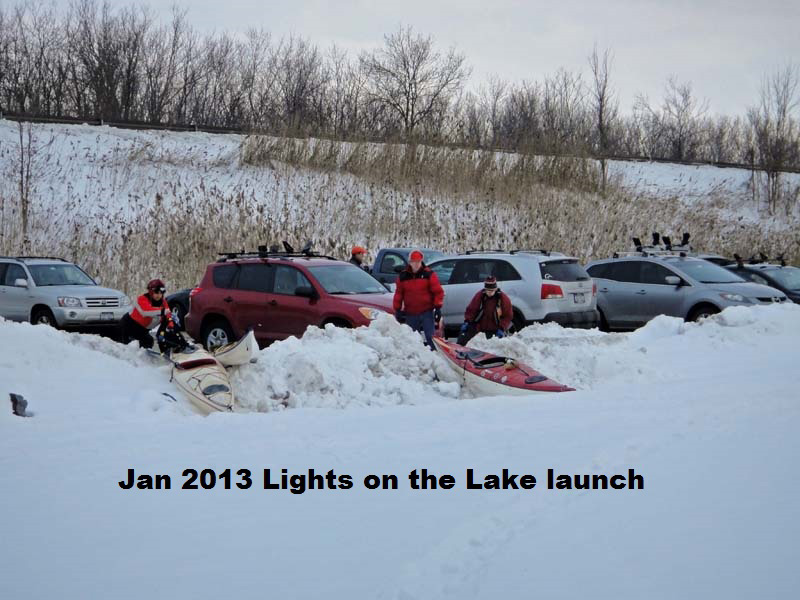
She organizes and participates in kayaking and camping trips throughout this region, the Finger Lakes and the Adirondacks. The club’s official season typically wraps up in December or January with an Onondaga Lake outing to view Lights on the Lake from the water, but some folks keep paddling in different locations until the last lakes freeze over.
 Some even have ice-breaking equipment and can, at least hypothetically, paddle on flat water in Oneida and Onondaga lakes nearly year-round.
“If the water is clear, we have people who will go,” said Eric Zhaman of the CNY Kayak Club.
“We’ve kayaked in snowstorms,” Wojnowicz said. “But I don’t know many that go looking for those conditions.”
There is a long list of items needed to assure comfort and safety in cold-water kayaking, club members and experts explained.
For starters, boats should be at least 14 feet long. Shorter, wider boats, more commonly sold at large retailers or sporting goods stores as opposed to specialty kayak shops, are fine for short distances and floating around in warmer water, but they are not built for cold-water paddling, Zhaman said.
“They can’t keep up and they don’t track very well,” he said.
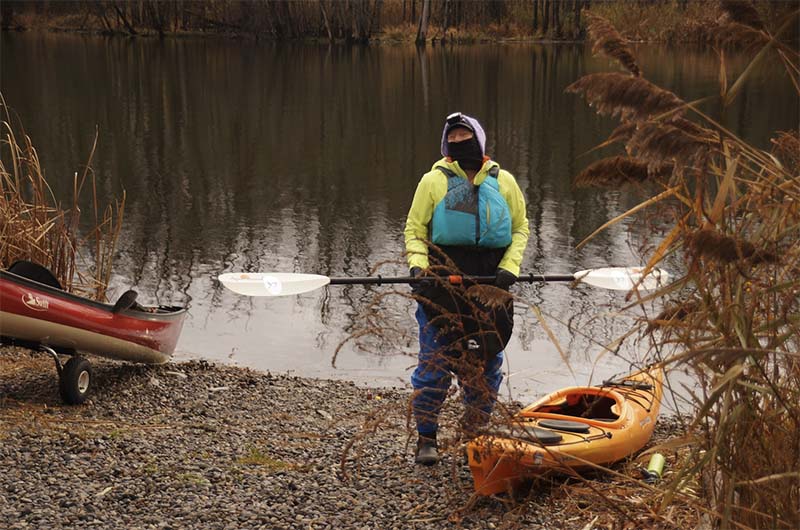
Paddlers should plan on layers of clothing, including fleece or a synthetic material, but never cotton.
 The Paddle Round the Pier website recommends keeping extra layers in a dry bag but advises avoiding overdressing.
“Start cold. You’ll warm up fast once paddling,” the website says. “Sweating in dangerous conditions is dangerous.”
It recommends gloves and footwear made with neoprene material that’s designed for paddling. There are also personal floatation devices/life preservers made with hand warmers.
A few members of the CNY Kayak Club have dry suits, which are very expensive and usually attend late fall trips as an extra safety precaution, Wojnowicz said, adding that the club is also equipped with tow ropes, whistles, walkie-talkies and pumps to remove water that gets inside boats.
Most paddlers also install spray skirts to cover their cockpits in colder weather, she said.
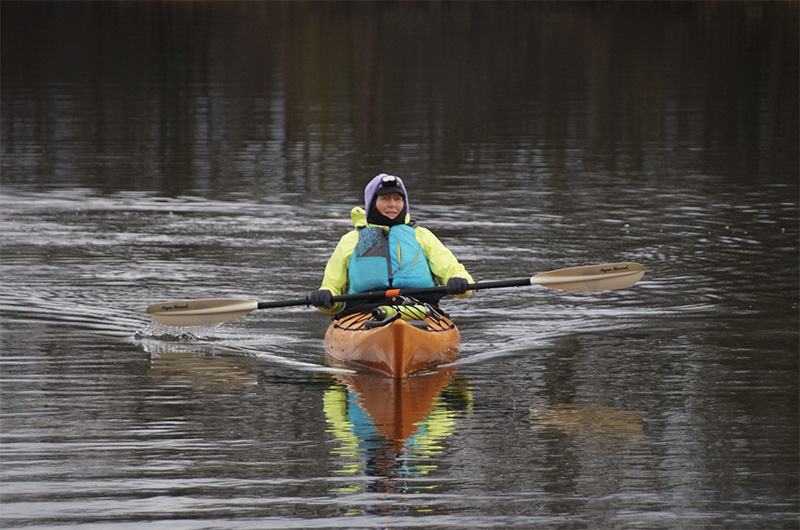 Even the most seasoned warm-weather kayakers should not presume paddling in late fall, winter or early spring doesn’t require special attention to the elements, especially when exploring new lakes, rivers and creeks, said Kathy Karpinski, CNY Kayak Club member.
“Don’t go alone, “she said. “And you need to be familiar with the body of water.”
Winter kayaking even involves different techniques, because cold muscles don’t respond like warm ones, the Paddle Round the Pier website notes. Use shorter, more frequent strokes with a wider grip on the shaft and a lower paddle angle for stability. Focus on torso rotation to prevent arm fatigue.
Base distance from shore according to water temperature to plan for a worst-case scenario where you would have to swim to shore. If the water is 40 degrees, for example, the kayaker should be within 50 yards of shore.
“Start small, gear up properly and always paddle within your limits. The winter water world waiting for you is magical, but it demands respect. Stay safe, stay warm and I’ll see you out there when everyone else is hibernating,” the site says.
“Remember: the best winter kayaking tip is simply this: If you’re questioning whether conditions are safe, they probably aren’t. There’s always another day to paddle. Choose wisely and winter will reward you with experiences summer paddlers can only dream about.”