
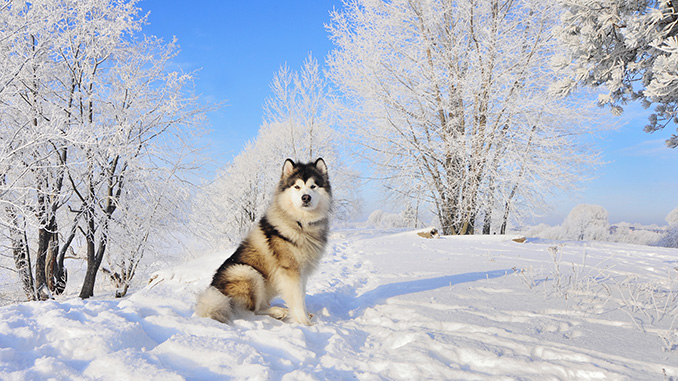
Enjoy the season with your furry friend
By Deborah Jeanne Sergeant
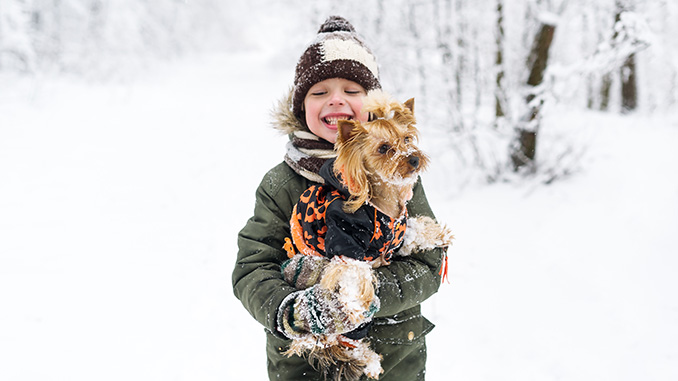 Many dogs enjoy outdoor recreation in winter. Try these ideas for more fun with your dog while the snow flies:
Skijoring
This activity involves using dog power to help propel someone on cross country skis via harness and tether. Your dog should feel comfortable wearing a harness and respond well to voice commands. Need help on getting started? Seneca Siberian Husky Club (https://senecasiberianhuskyclub.org, Rochester area) welcomes Siberian Husky owners and those with other “pulling” breeds such as the Bernese Mountain Dog.
Sledding
As with skijoring, dog sledding requires large, pulling breed dogs, along with the harness and other equipment. Run by Dogs in Sharon Springs (www.runbydogs.com) is one example of a dogsledding group. As with skijoring, your dog should respond well to voice commands and feel comfortable wearing a harness. “Pulling” dogs excel at sledding.
Snowshoeing
Depending on your dog’s size, you can snowshoe with him. Expect a quiet evening after he’s spent the day bounding through the snow while you walk on the surface. Snowshoe only with dogs well trained to walk on a leash.
Snow play
If you have a fenced backyard or access to a dog park, try a few fun activities with your pooch such as:
• Snowball fetch. Will your dog return with the snowball or just eat it?
• Snow treasures. Let your dog see you toss a few small treats into fluffy snow and enjoy watching the hunting—and digging. Or test your dog’s nose by hiding treats before he comes outside.
• Snow obstacle course. Enlist the family to help you build snow walls and tunnels for your dog to explore.
Protect your pal from the elements. Use paw wax or dog boots as needed. Look out for sidewalks that have been spread with ice melting granules. These may hurt your dog’s feet. Breeds with shorter hair may need a dog coat to stay warm enough. Breeds like German shepherds, malamutes, or akitas can spend extended periods of time outside in perfect comfort. They frequently resist going indoors for long after their humans have had enough.
Shorter hair breeds like black Labs or beagles need another layer of protection. In general, your dog’s ear temperature indicates whether he’s becoming too cold to stay outside any longer. Look for signs such as holding a paw in the air, limping, or whining. Very young, old or pregnant dogs have lower cold tolerance. Consider dog sun goggles in bright conditions, as the sun reflecting on snow can hurt his eyes.