By Tom and Jerry Caraccioli
When most people in Central New York and beyond hear about the Salmon River in Pulaski, it is usually in the context of fishers from around the world vying to catch yard-stick long salmon on a brisk, beautiful day in September and October amongst the changing colors of the foliage.
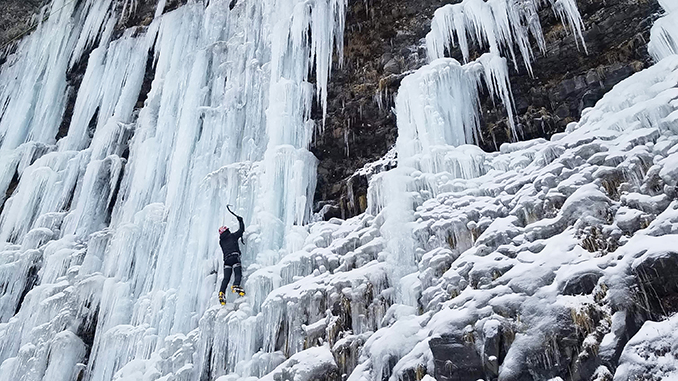
For others who may be a bit more adventurous throughout the colder months of January, February and March, Salmon River and the Salmon River Falls offers one of the best spots for another sporting activity.
It is during this time that fishing poles, hats, vests, lures and nets are replaced by harnesses, ropes, helmets, crampons, ice axes, carabiners, slings and pulleys and other climbing gear in order to enjoy the sport of ice climbing.
Oswego residents Rick Bush and Scott Somers have been climbing the falls at the traditionally notable mecca of fishing for decades.
“Prior to ice climbing, I was rock climbing in Little Falls, in the New Paltz area,” Bush, 64, said. “I had a friend in school that inquired about ice climbing, and I knew of the Salmon River area. I wasn’t an ice climber at the time and I took him there and he was amazed at what was available to climb. So, after that I went and bought equipment and we started to climb at Salmon River. That was 32 years ago, since 1993.”
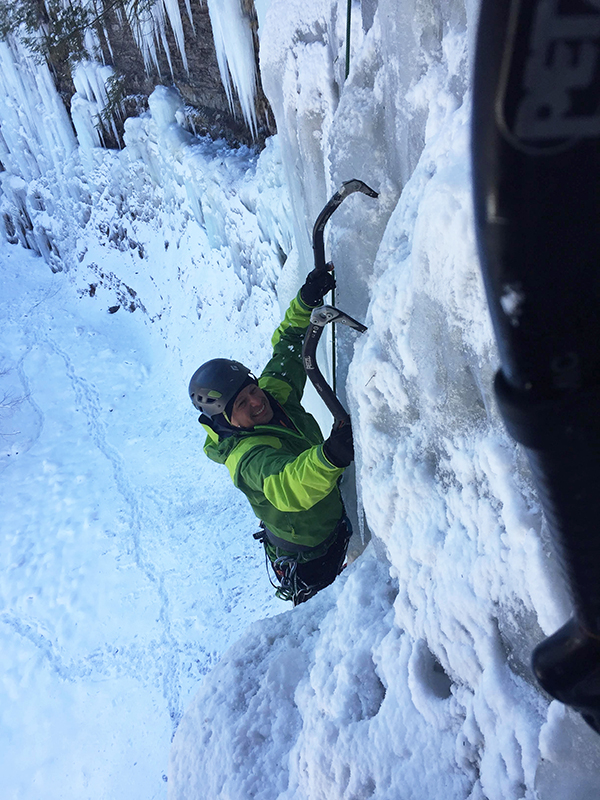
Somers, 60, has been climbing for at least a decade. “I got involved with Rick,” Somers said. “We raced bicycles on the same team for years and I started rock climbing and then ice climbing with him.”
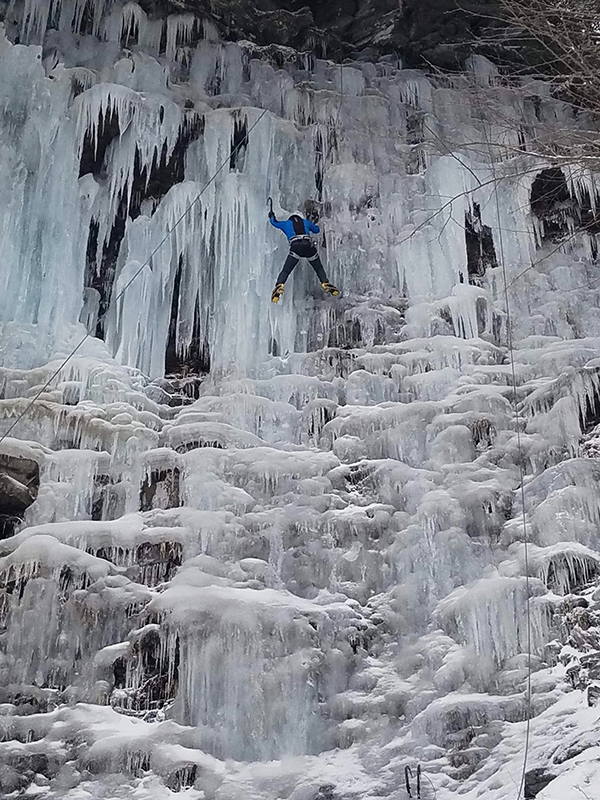
At Salmon River, the ice walls are anywhere from 90-100 feet vertical. It usually takes experienced climbers about 30 minutes to ascend and descend the natural ice sculptures created when water flows from a stream over the falls. Because the Salmon River Falls itself is off limits to climbers, most of the climbing landscape is formed from ‘seepage,’ water that seeps out of the shale. These types of vertical winter edifices come in the fastest and leave the latest.
“There are some winters when the ice, we call it fat or laminated ice, can be climbed anywhere,” Bush said. “There are other years when the ice is very thin and it is difficult to find routes. Typically, around here, if we can start climbing in January, sometimes December would be a bit of a miracle, it’s not bad. After that, February and March is full on.” Somers added. “As long as there are no big rains or warm cells.”
One type of climbing is called top roping, the anchor is set at the top with one climber standing at the bottom while the rope is looped through and the other climber takes up slack. When a climber gets to the top they can just lower themselves, belay (securing a climber with a rope, typically managed by a partner to catch falls and control descents), back to the bottom. The other form of climbing is lead climbing. When participants lead climb, both climbers start from the bottom and ascend without anything above them. What’s different is the lead climber has ice screws. These screws are very long and burrow into the ice. From there, climbers can clip in and put their rope through the screws to protect themselves in case of a fall.
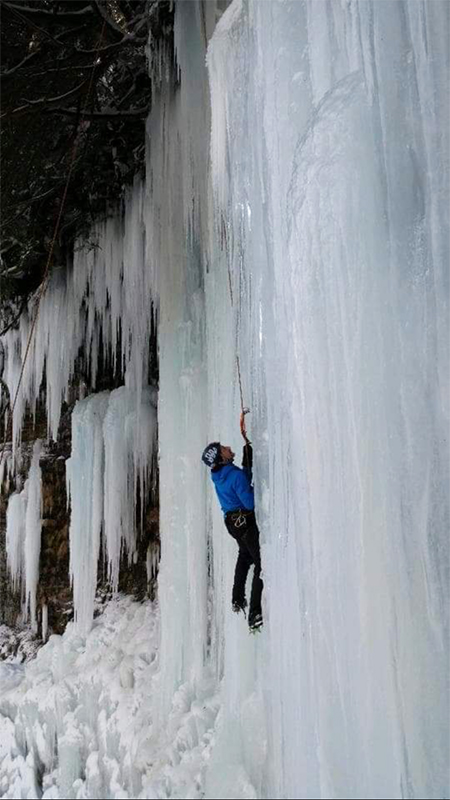
Bush and Somers insist anyone can take up the sport, and they take beginner climbers out all the time.
While experienced climbers may challenge themselves and make the climb more difficult, they can simplify it for newbies and not climb as high. First timers often can’t make it to the top.
And, because Salmon River is a designated area with a high rating, it is very difficult and potentially dangerous for those climbers unfamiliar with the landscape.
“The biggest dangers at Salmon River are areas where the ice will ‘chandelier’ [create big icicles] and those are the areas you need to avoid. You don’t want to be under those ‘chandeliers.’ We’ve seen some very close calls with people new to the area that don’t understand that,” Bush said.
Overall, the Salmon River Falls area is made for ice climbing afficionados who want to stay active despite the cold climate. While Central New York has its moments of frigidity, it also has thaws that make an ice climbing experience unforgettable.
“It’s absolutely better to climb when it is warmer,” Somers said. “March is our ideal time to climb. Axes stick into the ice very easy, same with your feet. Otherwise, if it’s really cold and you hit the ice, it shatters and it is really hard to get your tools into the ice. Sometimes you have to swing your ax a lot and it tires you out.”
Bush added, “On a top rope climb, there is little or no consequence to that [shattering ice]. If you’re leading, it can multiply into being very difficult because you’re swinging the ax multiple times in order to pull up on. It adds a whole new element to lead climbing. When you’re lead climbing you prefer ‘plastic ice’ where you can stick it. When the ice is brittle, it can get a little sketchy.”
It also can be expensive starting out.
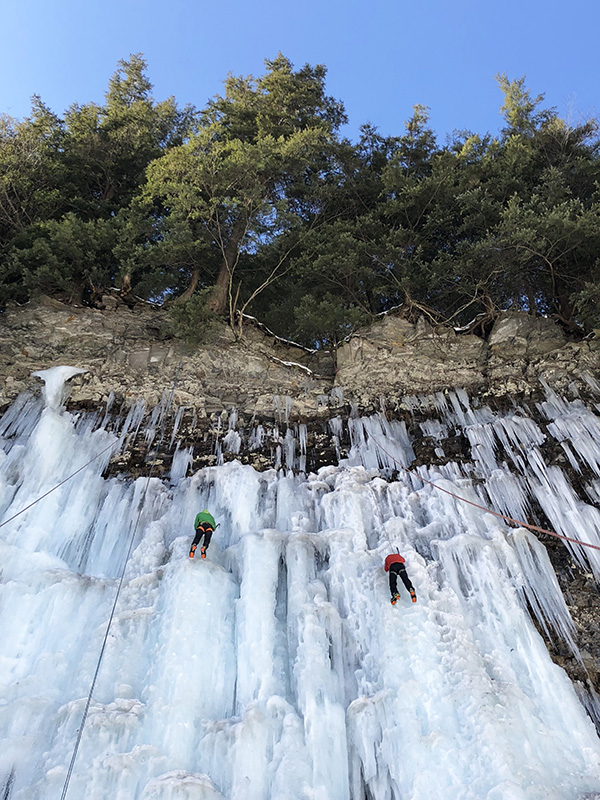
“You’re looking at north of $1,000 to fully equip yourself with the equipment, helmets, axes, clothing,” Bush said. “We have specialized pants, waterproof, we take multiple sets of gloves. If you sweat, you might have to change gloves, so we have multiple pairs. We have down jackets that we belay with and then a regular climbing jacket.”
Despite the potential price barrier for beginners, climbers like Bush and Somers encourage those wanting to try the sport. And they clearly have the perfect spot to take them.
“We have extra equipment and take people out with us,” Bush said. “We have a bunch of super fit, driven people who have joined our group. It’s local so we don’t have to travel too far to do it. We are so lucky to have this here.”
Tom and Jerry Caraccioli are freelance writers originally from Oswego, who have co-authored three books: “Striking Silver: The Untold Story of America’s Forgotten Hockey Team,” BOYCOTT: Stolen Dreams of the 1980 Moscow Olympic Games” and “Ice Breakers: A Kid’s Guide to Hockey and the Greatest Players Who Changed the Game.”